
The Market of Certifications
Listen to This Post
When you first start out as a nanny, the barrier to entry feels surprisingly low. You don’t need a long list of certifications or specialized training, just experience, common sense, and a genuine ability to care for children. Many nannies begin with babysitting, helping family, or learning on the job. But once you start looking at parent ads or agency listings, a different picture emerges.
Suddenly, the expectations stack up. CPR and first aid. A driver’s license. Ability to swim and cook. Fluency in another language. Familiarity with different childcare philosophies. A bachelor’s degree in early childhood education. And on top of that an active and well-mannered person, who is able to model a healthy lifestyle. None of these are unreasonable on their own. But together, they start to form a kind of unofficial checklist of what a “carrer” nanny should be.
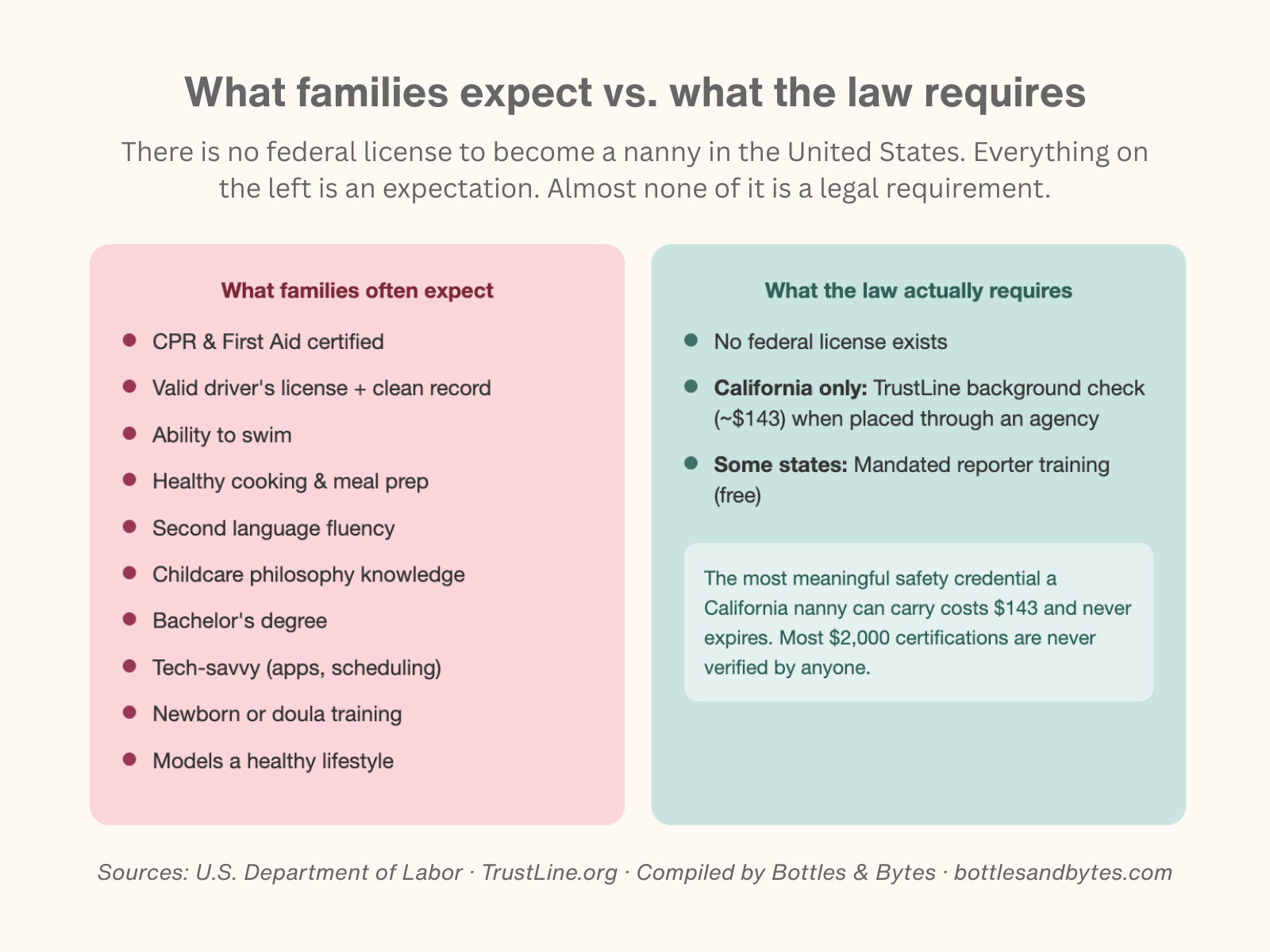
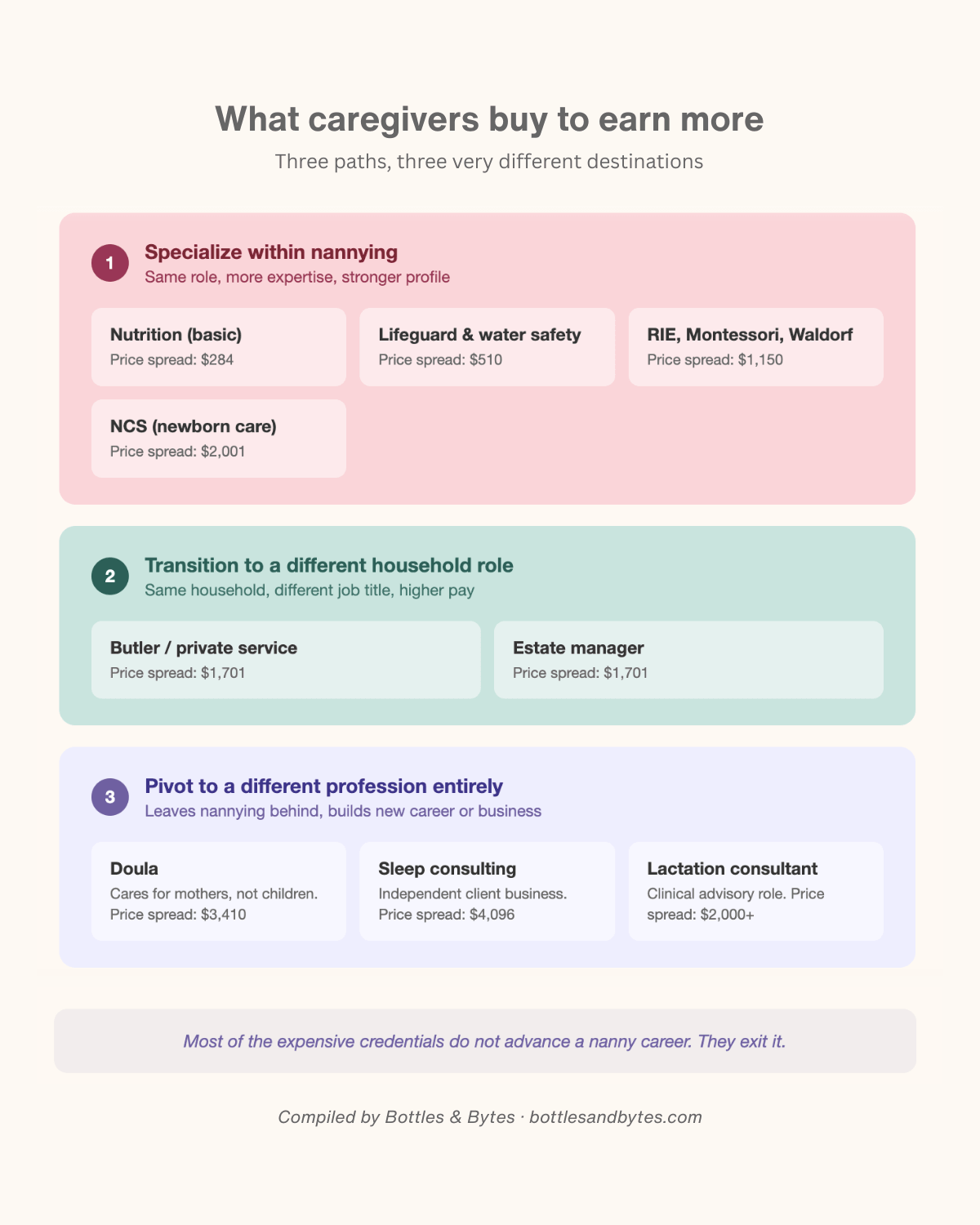
And then, if you want to advance or to stand out, to charge more, to move into higher-paying roles, another layer appears. Postpartum doula training, newborn care specialist courses, butler certifications, teaching degree... More titles, more credentials, more proof.
It’s easy to start believing that the more you collect, the more valuable you become. But after spending time in the industry, another question starts to surface: is it worth it?
A Market With No Rules
The nanny role didn't expand overnight. It happened gradually, listing by listing, expectation by expectation. Families started asking for healthy cooking, then organic meal prep, then a nutritional background. They asked for a driver, then a clean record, then fluency in a second language for immersion at home. They wanted someone tech-savvy enough to manage scheduling apps, coordinate with other household staff, and handle a family calendar. All under the title "nanny".
And the credential market followed that expansion, without any of the infrastructure that normally comes with a regulated profession.
Unregulated and unseen
In a regulated profession like nursing, teaching, or social work, accreditation means an independent government-recognized body reviewed the program against a national standard. It's not self-declared. There are consequences if standards aren't met.
Childcare has none of that. No license required. No governing board. No one setting prices or defining what a course must cover. And in that absence, a market grew that is largely unregulated, often overpriced, and frequently built by people looking for an additional income stream or a way out of the industry entirely. Nobody stops them from charging whatever they want, because there is no one to stop them.
The work itself isn't so different from nursing. You manage health, safety, development, emotional wellbeing; sometimes all at once, sometimes alone. But one profession is licensed, governed, and respected. The other is seen as something anyone can do. And that perception is exactly what keeps the ceiling low, the market unregulated, and the certifications easy to sell.
The Honest Math
Six years of experience. Good references. Clean record. CPR certified. Fluent in two languages. At some point, the question that most caregivers eventually ask: "Is the work worth the money?"
So you start looking for answers. And since nannying is the only thing you ever did, you first search for what helps. You find courses, credentials, specializations. Each one promises something, a stronger profile, a higher rate, a way to stand out and earn more.
Unfortunately the pay rarely follows. The uncomfortable truth is that the things that actually move pay are also things that most caregivers either already have or spent years building before they ever bought a single certification. A second language. A bachelor's degree. A reputation built family by family, year by year.
And at some point even that doesn't matter. You hit a ceiling and the rate stays where it is, no matter what you add to your profile. Not because you don't do your job well, but because the work you do is historically and systematically underpaid and undervalued. Knowing that doesn't make the work easier. But it might make the next $800 decision a little clearer.
What do you think actually moves nanny pay?
Current Results:
More Caregiver Experience

Caregiver Experience
Working Through the Holidays
The tree is up, the family is together, and you're still at work. A nanny's honest look at holidays, holiday pay, and what it really feels like to spend the season in someone else's home.
 B&B Podcast

Caregiver Experience
Aging Out as a Nanny: What Comes Next?
There’s no right time to leave nannying, only the right time for you, and that choice can lead anywhere.

Caregiver Experience
When Parents Undermine Your Expertise
How to advocate for yourself when your judgment isn’t trusted. Learn how small daily choices shape bigger challenges for kids, families, and caregivers alike.
Thinking about a certification? Before you spend, ask the right questions. Certifications Checklist walks you through what to look for, and what most programs won't tell you.

Written by Sylwia Glinska
Founder of Bottles & Bytes • Nanny, Newborn Care Specialist & Childcare Consultant
Get To Know Me